

Cassia essential oil


Cassia essential oil
Category:
- CAS : 8007-80-5
- Science name : Cinnamomum cassia
- Taste, Color : Characteristic aroma and hot spicy taste. Yellow to reddish brown
- Origin : Vietnam
- Extraction method : Steam distillation
- Main ingredient : Aldehyde cinnamic > 80%
- Annual output : 500 tons/year
- Harvest season : from February to October


RAW MATERIAL REGIONS
In Vietnam, cassia is grown predominantly in concentrated forests in the northern mountainous regions of provinces such as Yen Bai, Lao Cai, Lang Son, Lai Chau, Thai Nguyen, Son La, and Quang Ninh.
As of the end of 2022, Yen Bai has approximately 100,000 hectares, and Lao Cai has about 60,000 hectares of cassia cultivation, making them the two provinces with the largest cassia cultivation areas in Vietnam. The cassia cultivation area is predicted to continue to increase rapidly in the coming years to replace less efficient crops.


HARVESTING
Cassia essential oil is distilled from the branches and leaves of cassia trees planted for approximately 7 years, with a minimum of 80% cinnamic aldehyde as the main active ingredient.
After harvesting, the cinnamon branches and leaves are stored under natural, dry conditions for at least one month before being subjected to distillation to ensure the oil has a beautiful color and maximum efficiency.
DISTILLATION OF CASSIA OIL
The distillation equipment utilizes steam distillation technology, heating through a high-capacity steam boiler. The condensation unit employs tube bundle condensation technology to ensure maximum efficiency. Approximately 7 kg of essential oil can be obtained from one ton of cassia branches and leaves.


BIOFUEL
After distillation, cassia branches and leaves residue are reused as fuel to provide heat for boilers. Therefore, the cassia essential oil distillation process does not use coal, contributing to environmental protection.
APPLICATION IN PRODUCTION
Food industry: Cassia essential oil, with its natural sweet, spicy flavor, is widely used in beverage production such as cinnamon tea, cinnamon wine, and soft drinks. It is also used as a seasoning in many popular dishes.
Cosmetics industry: Cassia essential oil contains active ingredients such as cinnamaldehyde, benzaldehyde, and cinnamal acetate, which have antibacterial and antifungal properties and a pleasant fragrance. Therefore, it is used in household cleaning products like floor cleaners, laundry detergents, dishwashing liquids, furniture polishes, shower gels, and fat-reducing creams.
Pharmaceutical industry: Cinnamon essential oil has thermogenic properties, relieves cold, disperses wind, reduces pain, and warms the body. It is used in liniments, massage oils, and alcohol rubs.

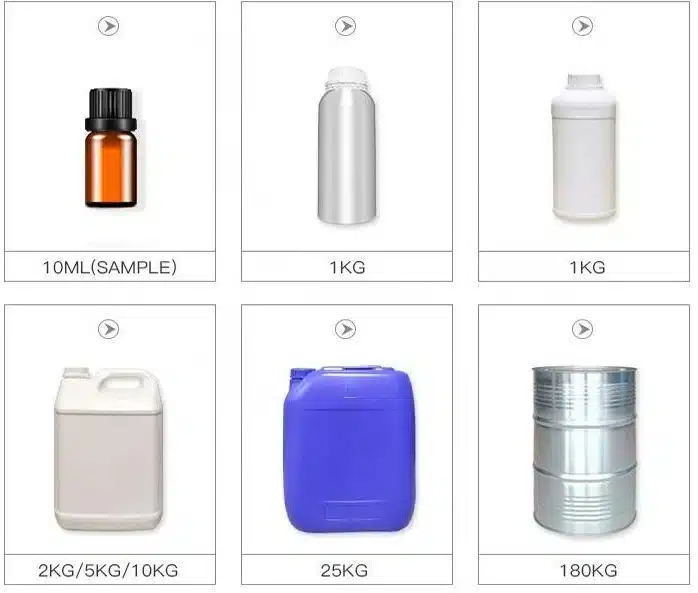
PACKING, STORAGE & TRANSPORTATION
Specifications Packaging: Cassia essential oil is packaged in 1 kg, 5 kg, 25 kg, and 180 kg packs.
Storage: The product is packed in standard HDPE packaging. Store in a dry, cool place, away from direct sunlight. Avoid contact with eyes, open wounds, and sensitive skin areas.
Transportation: Domestic: Flexible nationwide transportation by train, truck, airplane…
Export: Ship/ Airplane, Export Conditions: FOB/ CIF/Door to door…
Related products


CAS: 8007-08-7 Name: Zingiber officinale Zingiberaceae

BOTANICAL CHARACTERISTICS & GROWING REGIONS Ginger (Zingiber officinale Roscoe) is a herbaceous plant belonging to the Zingiberaceae family and is widely cultivated in tropical and subtropical regions. The plant typically grows 0.6–1.2 m tall. Its above-ground pseudostem is formed by tightly overlapping leaf sheaths. The leaves are long, narrow and lance-shaped. The most economically important […]